
African Precious Metals: The Definitive Authority Resource for Global Investors, Buyers & Industry Professionals
The African precious metals sector represents a $200+ billion industry undergoing its most significant transformation in a century. With the global energy transition accelerating, African gold, platinum, palladium, silver, and PGMs have emerged as strategic assets of global significance. This is your complete guide to buying gold in Africa, navigating regulations, and securing your supply chain from the source.
Why This Resource Exists: Your Strategic Advantage
This is not just another industry overview. It is a strategic toolkit for institutional investors, commercial buyers, and procurement professionals. We move beyond surface-level information to deliver actionable intelligence: market forecasts, verified supplier verification protocols, regulatory compliance frameworks, ethical sourcing strategies, and direct access to navigational resources.
Actionable Intelligence
Proprietary insights on emerging mining provinces and verification methodologies for commercial buyers. Learn more about gold trading in Africa.
Regulatory Roadmap
Clear regulatory pathways across key African jurisdictions like South Africa, Ghana, and the DRC. Understand export requirements in each region.
Direct Sourcing & Verification
Exclusive insights on value addition, beneficiation, and verified contact and navigational resources. Connect with licensed gold dealers directly.
Africa's Precious Metals Portfolio: What, Where, and How Much?
Understanding the continent's vast mineral wealth is the first step to making informed investment and procurement decisions.

What Precious Metals Are Found in Africa?
Africa is a treasure trove of precious metals, hosting a diverse and globally significant portfolio.
- Gold (Au): Found throughout the continent, with major deposits in Ghana, South Africa, Mali, Tanzania, and Burkina Faso. Africa produces over 20% of global gold supply.
- Platinum Group Metals (PGMs): Including platinum, palladium, rhodium, iridium, osmium, and ruthenium. South Africa's Bushveld Complex holds ~70% of global platinum reserves.
- Silver (Ag): Often a byproduct of gold, copper, and PGM mining. Major producers include South Africa, Ghana, and the DRC.
- Cobalt: While a base metal, it is increasingly viewed as a critical precious metal for the energy transition. The DRC holds 50-60% of global reserves.
- Copper: Essential for electrical infrastructure, with the DRC and Zambia as major producers.
- Diamonds: While not a metal, they are a critical precious resource, with Botswana, South Africa, and the DRC as top producers.
What is the Most Expensive Metal in Africa?
By value per ounce, rhodium consistently ranks as the most expensive metal in Africa and globally. Its price is driven by its critical use in catalytic converters for diesel engines and its extreme scarcity.
Browse African gold bullion for a more stable investment.
The Geographic Powerhouses—Where Africa's Metals Come From
Africa's mineral wealth is concentrated in distinct geographic zones, each with unique characteristics, regulatory environments, and investment profiles.
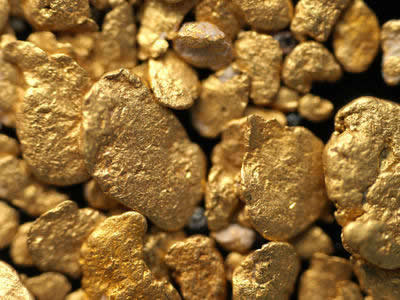
South Africa: The Platinum and PGM Superpower
Global Strategic AssetSouth Africa's Bushveld Complex is a geological marvel, containing approximately 70% of the world's platinum reserves and producing nearly 80% of global platinum output. This single deposit is responsible for the majority of the world's platinum group metals (PGMs).
Production Statistics (2025)
- Platinum production: ~120 metric tons annually
- Share of global platinum reserves: ~70%
- Share of global platinum production: ~60-65%
- PGM mining industry employment: ~200,000 direct jobs
Major Operators
- Anglo American Platinum (Amplats)
- Impala Platinum Holdings (Implats)
- Sibanye-Stillwater
- Northam Platinum
Ghana: West Africa's Gold Engine
Best for TransparencyGhana has emerged as Africa's largest gold producer, contributing approximately 20% of regional gold output. The country's gold production is projected to reach 5.2 million ounces by 2025, driven by new mine developments and expansions.
Why Ghana Attracts Investment
- Political stability (peaceful democratic transitions)
- Established mining infrastructure
- Transparent fiscal regime (royalties at 3-5%)
- Strong legal system with established mining law
Regulatory Authorities
DRC: The Critical Minerals Hub
High Reward, High DiligenceWhile the DRC is globally recognized for its cobalt deposits (accounting for 97.2% of Africa's cobalt production), the country holds substantially more mineral wealth. Due diligence is essential, given historical associations with conflict minerals.
Resource Portfolio
- Cobalt: 50-60% of global reserves
- Copper: Significant high-grade deposits
- Gold: Major artisanal and industrial production
- Coltan: Significant tantalum production
Due Diligence Framework
- OECD Due Diligence Guidance for Responsible Supply Chains
- US Dodd-Frank Act Section 1502
- EU Conflict Minerals Regulation
- Responsible Minerals Initiative
Nigeria: Emerging Polymetallic Powerhouse
Significant new discoveries include a "world-class polymetallic mineral province" in Kaduna State, with high-grade platinum, gold, nickel, copper, lithium, and rare earth elements. The government is revoking 3,000 mineral titles to sanitize the sector. Explore Nigerian gold suppliers.
Zimbabwe, Tanzania & Botswana
Zimbabwe: Significant gold and platinum reserves (Great Dyke). Tanzania: Major gold producer, relatively stable political environment. Botswana: World's largest diamond producer by value, highly stable, with a transparent regulatory framework. Learn about Tanzanian gold.
Which Country in Africa Has the Most Gold Reserves?
South Africa holds the largest gold reserves in Africa, with estimated reserves of around 5,000 metric tons (as of recent geological surveys). However, it is important to distinguish between reserves (economically mineable) and production (annual output).
- South Africa: ~5,000 metric tons (largest reserves)
- Ghana: ~1,000 metric tons
- DRC: Significant reserves, though not fully quantified
- Mali: ~800 metric tons
Which African Countries Produce Gold?
Gold production is widely distributed across the continent. The top gold-producing nations in Africa are:
- Ghana - ~4.8 million ounces (2024)
- Mali - ~2.0 million ounces
- South Africa - ~1.8 million ounces
- Burkina Faso - ~1.5 million ounces
- Tanzania - ~1.3 million ounces
- DRC - ~1.0 million ounces
- Sudan - ~0.9 million ounces
- Zimbabwe - ~0.8 million ounces
Connect with gold suppliers from these top-producing nations.
Market Intelligence and Price Dynamics (2025-2031)
Platinum Group Metals (PGMs) Outlook
| Metal | 2025 Outlook | Key Demand Drivers |
|---|---|---|
| Platinum | -6.4% production decline | Autocatalysts, H2 fuel cells, jewelry |
| Palladium | Stabilizing | Autocatalysts (gasoline), electronics |
| Rhodium | Volatile, elevated prices | Autocatalysts (diesel), glass production |
| Iridium | Constrained, rapid growth | Electronics, H2 electrolysis |
Check current African gold prices and market intelligence reports.
Gold Market Fundamentals
African gold production is expected to grow modestly, driven primarily by West African projects.
Price Influences
- Global interest rate environment
- US dollar strength
- Geopolitical uncertainty
- Central bank gold purchases
Regulatory Landscape—Navigating Compliance Across Jurisdictions
Understanding the regulatory framework is essential for any commercial operation in Africa. Learn about gold export regulations.
4.1 South Africa: The SADPMR
The South African Diamond & Precious Metals Regulator (SADPMR) is the primary authority overseeing licensing, export, and regulation of precious metals.
Key Functions
- Issuing licenses for diamond and precious metal operations
- Monitoring export compliance
- Ensuring traceability and chain of custody
- Enforcing anti-money laundering compliance
Licensing Requirements
- Exploration License: 1-3 years, renewable
- Mining License: Up to 30 years
- Refining License: 5 years, full re-application
- Export Permit: Per shipment or annual
4.2 Ghana: Minerals Commission Framework
Ghana operates a transparent and well-established mining regulatory environment.
Key Regulatory Bodies
Key Compliance Points
- Royalty rates: 3-5% of gross revenue
- Corporate tax rate: 25-30%
- Community development agreements: Mandatory
- Local content requirements: Growing emphasis
4.3 DRC: Complex but Opportunity-Rich
- State participation: Government can acquire up to 10% of mining projects
- Artisanal mining regulation: Essential for due diligence
- Conflict minerals legislation: US Dodd-Frank, EU regulations apply
- Due Diligence Imperative: OECD Due Diligence Guidance
4.4 Nigeria: Reforms and New Opportunities
- Recent Reforms: Revocation of 3,000 mineral titles
- Industrial processing zones: With infrastructure incentives
- Local beneficiation: Emphasis on domestic processing
- Revenue sharing: 5% of government revenue to host communities
Commercial Verification—Ensuring Authenticity and Purity
The precious metals industry faces significant fraud risks. Africa's status as a major producer has made it both a target and a source. View our certified gold verification standards.
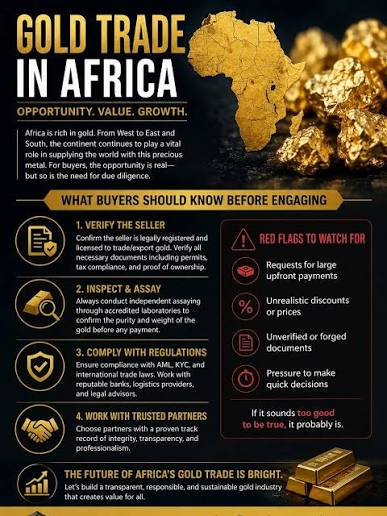
Common Fraud Types and Detection Methods
| Fraud Type | Description | Detection Method |
|---|---|---|
| Tungsten-filled gold bars | Dense metal mimics gold's weight | Ultrasonic testing, XRF, specific gravity |
| Falsified refinery certificates | Fake LBMA accreditation documents | Direct verification with LBMA and refinery |
| Phantom supplies | Supplier takes deposit but never delivers | Credit checks, site visits, bank references |
| Purity misrepresentation | Claiming 99.99% when purity is 90% | Independent fire assay, XRF analysis |
The Verification Protocol: Six Steps to Authenticity
Independent Assay
Engage an internationally recognized assayer (SGS, ALS, Bureau Veritas, Intertek, Rand Refinery).
XRF Analysis
Immediate, non-destructive analysis of metal composition and purity. Verify pure gold composition.
Fire Assay
The most accurate method for determining gold purity (±0.01% accuracy). Accepted by LBMA.
Chain of Custody
Review complete documentation: origin, transport, security, export permits. Work with trusted exporters.
Physical Site Visit
Conduct physical site visits to verify operational capacity and security. Find African gold suppliers for verification.
B2B Trading and Commercial Navigation
Understanding the financial mechanics and operational dynamics of the industry. Learn more about gold trading in Africa.
Financial Mechanics of Precious Metals Trading
| Instrument | Description | Best For | Risk Level |
|---|---|---|---|
| Irrevocable Confirmed LC | Bank-issued guarantee of payment | High-value transactions | Low |
| Escrow Services | Third-party holding of funds | New relationships | Very Low |
| Bank Guarantees | Assurance of financial performance | Performance obligations | Low |
Secure your investment with proper financial instruments.
Supplier Comparison and Evaluation
CAPM African Precious Metals
- Function: Refining, trading, sourcing
- Purity Verification: LBMA accredited
- Minimum Order: 1 kg gold
- Payment Terms: Escrow available
China African Precious Metals
- Function: Refining, trading, sourcing
- Purity Verification: Independent certification
- Minimum Order: 5 kg gold
- Payment Terms: Bank letter of credit
Africa Minerals Group Exchange
- Function: Exchange platform for trading
- Purity Verification: Supplier dependent
- Minimum Order: Platform dependent
- Payment Terms: Platform terms
Future Outlook—Strategic Implications for Stakeholders
7.1 The African Century for Minerals
Africa is not merely a supplier of raw materials—it is positioning itself as a global hub for mineral processing and manufacturing.
Key Trends
- Local beneficiation: Processing and refining within Africa
- Industrial clusters: Nigeria, South Africa, DRC developing processing hubs
- Hydrogen economy: Platinum demand for fuel cells
- ESG-driven investment: Responsible sourcing required
Investment Implications
- For Investors: African precious metals ETFs, direct mine investment, streaming agreements
- For Buyers: Long-term supply agreements, strategic partnerships
- For Entrepreneurs: ASM formalization, processing services, consultancy
Continental Governance & Regulatory Bodies
Continental Framework
Trade Finance
Development Finance
Good Delivery Standards
Frequently Asked Questions
Your essential questions about buying and investing in African precious metals.
What is the most reliable method to verify 24-karat gold purity?
addWhat is the most expensive metal in Africa?
addWhich country in Africa has the most gold reserves?
addWhich African countries produce gold?
addWhat precious metals are found in Africa?
addWhat payment instruments reduce counterparty risk?
add- Irrevocable confirmed letters of credit from established banks
- Escrow services with independent third-party agents
- Bank guarantees providing financial performance assurance
How can I distinguish between legitimate and counterfeit gold suppliers?
addWhat are the key compliance requirements for exporting precious metals?
add- Valid SADPMR export permit
- Valid mining or refining license
- Proper chain-of-custody documentation
- Compliance with anti-money laundering regulations
- Payment of all applicable royalties and taxes
Your Partner in African Precious Metals
At Pearl Gold Africa, we specialize in connecting international investors with verified, licensed African gold suppliers. We provide the intelligence, verification, and partnership you need to secure your supply chain from the source.
For Investors
Review market intelligence reports and subscribe to our monthly outlook. Explore investment options.
For Buyers
Download our supplier verification checklist and schedule a consultation. View gold for sale.
For Suppliers
Register with our verified supplier network to connect with qualified buyers. List your products.
Disclaimer: This guide provides general information for educational purposes. Gold trading regulations vary by country and change frequently. Always consult with qualified legal and financial professionals before engaging in gold transactions. Pearl Gold Africa does not provide legal, financial, or investment advice. All transactions should be conducted in accordance with applicable laws and regulations.
Ready to Secure Your Investment?
Connect with our institutional trading desk to receive current market quotes and compliance documentation.